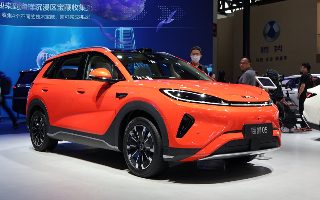
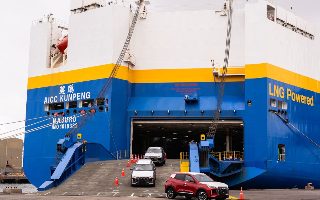
The European Commission is preparing time-limited safeguards that could cap imports of Chinese-made hybrid vehicles, potentially using tariffs on shipments above a quota, Bloomberg reported, citing people familiar with the plans. No quota, tariff rate or start date has been set; the EU is considering hybrids as a test case for measures to address trade imbalances with China, which could later extend to other sectors.
California has opened a $28 million funding round through the Fast Charge California Project for publicly accessible DC fast chargers, offering up to $100,000 per port. Applications from businesses, nonprofits, public agencies and other site owners are due by January 14, 2027; ready-to-build projects in disadvantaged, low-income and tribal communities will be prioritised.
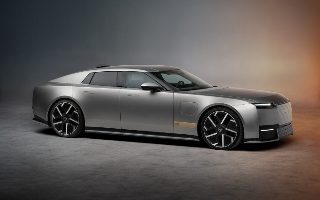
Jaguar unveiled the Type 01, its first production model since the brand’s relaunch: an all-electric four-door GT with three motors producing 758 kW, a 118 kWh battery and a claimed range of up to 720 km. Jaguar says it will start at €165,000 in Germany, with orders opening in early 2027 and deliveries planned for the second half of that year; official WLTP figures are not yet available.
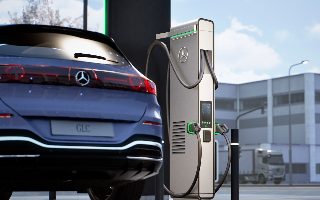
Mercedes-Benz delivered 68,400 battery-electric passenger cars in the third quarter, up 61% year over year, bringing BEVs to 16.8% of global passenger-car sales; including plug-in hybrids, electrified models made up 25%. The company said sales were led by Europe, while passenger-car sales in China fell 31%; Mercedes sales executive Mathias Geisen said the electric GLC, CLA, GLB and GLA are sold out in Europe for the rest of the year.
Traton R&D chief Niklas Klingenberg says the group is developing LFP batteries for its electric trucks, alongside its existing NMC work. He says battery-electric vehicles remain Traton’s main focus, while the company is also testing range extenders, overhead-wire charging and hydrogen for particular use cases.
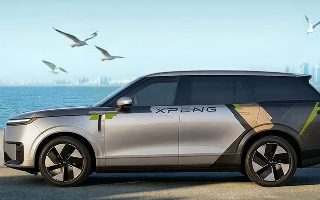
Xpeng opened an invitation-only pilot of its Yoyo robotaxi service in China on October 8, after employees completed more than 2,200 trial rides. The GX-based SUV uses four in-house Turing AI chips and Xpeng’s VLA 2.0 driving model; the company has not disclosed fleet size or a date for public access.
China’s National Energy Administration reported 163 million kWh of electricity use across highway charging facilities from October 1 to 7, up 51.42% in daily average terms year over year. Charging volume hit a holiday-period record of 28.05 million kWh on October 1, up 60.4%, across 62,700 monitored facilities.
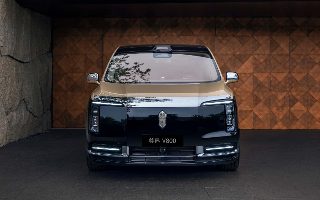
Huawei-JAC luxury brand Maextro said it will redesign the V800’s brake-pedal bracket and offer current owners a free upgrade after Dongchedi reported that the brackets fractured in emergency braking tests on all three vehicles it tested. Maextro said it had seen no such failures among customers and described the tests as extreme, but pledged to strengthen its design validation and quality controls.
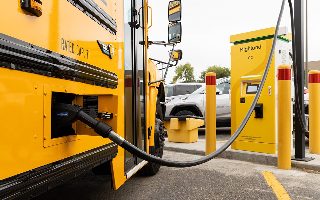
Jefferson County Public Schools has put six IC electric school buses and six bidirectional chargers into service, with $3.4 million in support from Xcel Energy and fleet services from Highland Electric Fleets. The project will test how buses can store power and send it back to the grid when they are not in use.
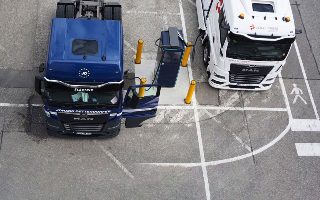
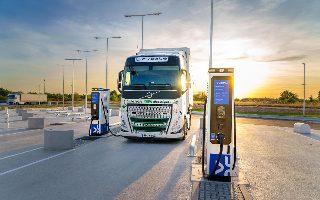
Voltix, a Vinci Concessions subsidiary, has opened a public electric-truck charging station in Vierzon, France, with four charging points rated at up to 1.5 MW each and CCS and MCS connectors. The site is planned to expand to eight points; Voltix aims to build 50 sites by 2028 as part of a network backed by nearly €90 million in investment.
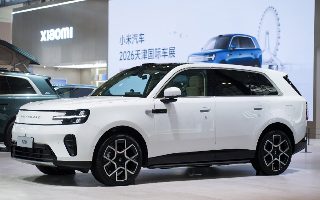
Xiaomi Auto said its Sky Nomad extended-range EV lineup received more than 70,000 locked-in orders from September 7 to October 7, its first month on sale; the company did not provide a breakdown by model. The lineup delivered more than 10,000 vehicles in September, contributing to Xiaomi Auto’s monthly deliveries exceeding 40,000.
Munich-based DeepDrive says it has been selected as a mass-production supplier for an unnamed global automaker, with production of its dual-rotor electric drive system due to start in 2028. The company did not disclose the vehicle, order volume or production site, and is establishing a Shanghai team as it expands into China.
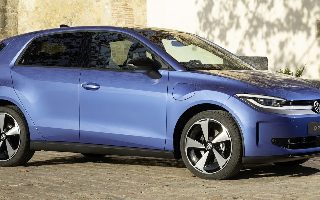
Transport & Environment (T&E) predicts sales in Europe of battery-electric cars priced at €25,000 or less will be seven times higher in 2026 than in 2024, as more affordable models reach the market. T&E reports 1.64 million battery EVs were sold in the first eight months of 2026, up 45% from the same period in 2025; nearly 40 new models launched in the first half, with about 60 expected by year-end.
Mazda has launched the China-built CX-6e electric SUV in Australia, with GT and Azami versions priced from A$56,990 and A$59,990 on the road in Victoria. The review says it shares its Changan EPA1 platform with the Deepal S07 but has Mazda-designed bodywork and interior and Mazda-tuned suspension; its 78kWh battery delivers a claimed 468km WLTP range. The author found it comfortable and capable, while criticizing the oversized infotainment screen and Azami’s digital mirrors, and recommends the cheaper GT.
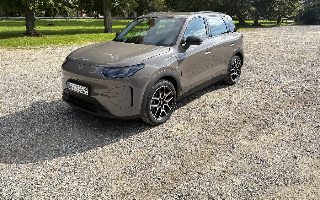
An Electrive test drive of Leapmotor’s B03X found a spacious, well-equipped small electric SUV with a 130- or 145-kW motor, priced from €25,400 in Germany. The reviewer praised its passenger room, practical storage and strong performance for the price, but noted its limited 292–382 km WLTP range, light steering, basic materials and cumbersome charging-route planning.
Reports say German Chancellor Friedrich Merz and French President Emmanuel Macron have agreed to seek a further easing of EU car CO₂ limits, beyond the European Commission’s proposed 90% reduction by 2035; with compensation options, the reduction could be as low as 80%. In exchange, Germany would back stricter “Made in Europe” rules for the automotive industry, while the reported deal also seeks more flexibility on the 2030 target. The agreement is not final, and EU Parliament and member-state approval is still required.
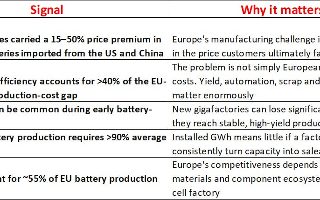
Battery Vault author Srinivas Popuri argues that European battery production costs exceed China’s because of combined disadvantages in materials supply, factory efficiency, yield, utilisation, scale, energy and labour—not just wages or electricity. Citing the European Commission and IEA, he says manufacturing efficiency accounts for more than 40% of the cost difference, and urges Europe to improve yields, ramp up existing plants and build out local supply chains.
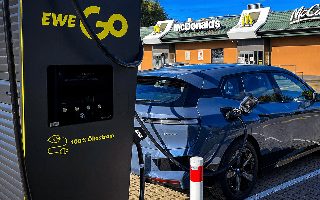
The Munich I Regional Court ruled that EWE Go must charge roaming provider Digital Charging Solutions (DCS) the same €0.52/kWh rate it charges its own app customers, rather than its €0.837/kWh wholesale price. The non-final ruling found EWE Go’s price differences unjustified under the EU’s AFIR rules and ordered it to pay DCS damages dating back to April 2024.
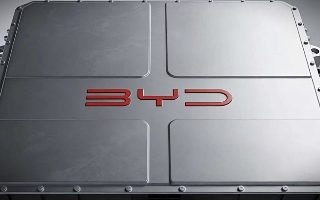
BYD’s patent application CN 122868832 A describes an energy-storage battery cabinet with cell modules submerged in dielectric fluid in a lower chamber, while electrical equipment sits in a separate dry upper chamber. Filed in March 2025 and published by China’s patent office on October 5, 2026, it routes electrical connections through the upper part of the liquid compartment to reduce pressure on the seals; the application remains under examination and does not indicate a production plan.
Honda, Taisei and Taisei Rotec say they have developed the core technology for wireless charging of vehicles while driving, with Honda supplying the transmitting and receiving units. They plan to build a test track by the end of 2026 and start demonstrations in Japan’s 2027 fiscal year, including a project on the Tateyama Expressway; tests will assess charging performance up to 150 kW and road-unit safety.
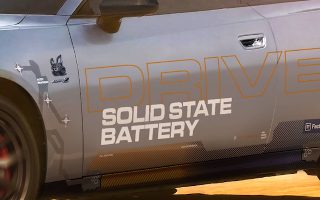
Factorial Energy says its quasi-solid-state battery achieved 375 Wh/kg and charged a test Dodge Charger Daytona from 15% to 90% in 18 minutes; Stellantis is evaluating the cells, which have also logged more than 600 cycles in testing. Factorial says its manufacturing process is about 80% compatible with existing lithium-ion production, and it has an agreement with SK On targeting commercialization around 2029. The results are promising but do not establish that Factorial will beat Toyota to mass production.
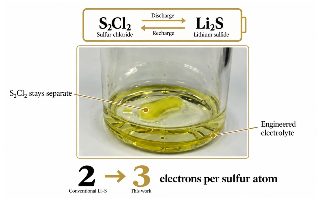
Researchers at Vanderbilt University and the University of Maryland added chlorine to lithium-sulphur battery chemistry, enabling sulphur to transfer a third electron and increasing its capacity by about 58% while raising average voltage from 2.05 to 2.54 volts. A laboratory pouch cell retained 78% of its capacity after 100 cycles; the researchers estimate the approach could reach 477 Wh/kg at cell level, though the prototype still uses substantial electrolyte and a lithium-metal anode.
Renault CEO François Provost says the company plans to invest more than €10 billion in France over five years, mainly in electric vehicles and more affordable models. The investment is conditional on political and social conditions meeting Renault’s expectations; the company has not specified which plants or models would receive the funding.
Electric vehicles accounted for 24.2% of Australia’s new-car sales in September, outselling petrol cars for the second consecutive month, according to data from the Federal Chamber of Automotive Industries. The Tesla Model Y led EV sales with 4,476, followed by the BYD Sealion 7 with 2,687 and the Geely EX5 with 2,008; battery EVs have taken 18.9% of sales so far in 2026, up from 8.1% at the same point last year.
ev.news’ 5 October 2026 briefing reports Kia’s new EV3, EV4 and EV5 GT models, Tesla deliveries that beat forecasts but fell 2.1% year over year, and sharp Q3 EV-sales declines at Ford and GM. It also covers Renault’s conditional pledge to invest more than €10 billion in France, Roadchef’s charging expansion, rising UK EV purchase interest, and G7 plans to release 100 million barrels from emergency reserves as diesel supplies tighten.
The UK is reportedly developing possible additional tariffs on Chinese electric vehicles, with Economic Secretary Jonathan Reynolds preparing options amid concerns about subsidised imports. No new tariffs have been imposed; the move could also help the UK qualify as a partner under the EU’s planned “Made in Europe” rules.
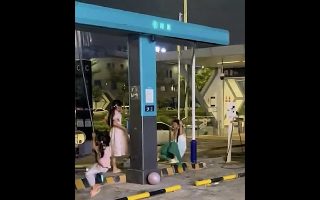
Video showed two children swinging from the suspended cable of an operating BYD Megawatt Flash Charger at a public site in Nanning, China, on October 2. BYD said playing on the equipment is prohibited and sent staff to inspect the station; the incident raised concerns that repeated swinging could damage the liquid-cooled cable or its overhead retractor, despite charging safeguards limiting electrical risk while the connector is docked.
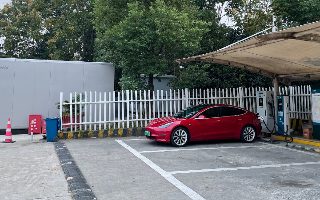
Germany’s electric-car subsidy program had approved nearly 100,000 applications by early October 2026, with €432 million disbursed; 91.6% of approvals were for fully electric cars and 8.4% for plug-in hybrids. BAFA’s statistics show more than half of recipients were in the lowest income bracket, while Tesla led the brand rankings, followed by Skoda and Cupra.
CATL opened an 8,000-square-metre Ning Service Centre in Oslo on 24 September, its largest outside Asia, to serve Norway and the wider Nordic region. The centre will diagnose, maintain and repair batteries, provide second-life and recycling services, and train local technicians; CATL says its repair expertise covers 76.8% of EV models.