Anthropic outlines a reference implementation for a scheduled Claude Managed Agent that reads Slack channels and GitHub pull requests, tracks changes between runs, and posts a daily brief to Slack. The guide shares setup files and recommends safeguards including per-source bookmarks, live checks before posting, read-only credentials for sources, persistent memory, and a spending cap.
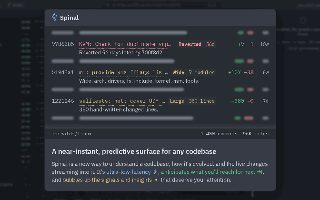
Spinal is a codebase exploration tool that aims to show how a project has evolved and surface live changes, branches, and relevant insights. Its creators say it returns initial search results in under 20 milliseconds in a benchmark of the Linux kernel’s 1.48 million commits and 96,000 files.
Anthropic released Claude Code v2.1.294, fixing prompt and agent hooks that were written as instructions to block actions but instead allowed them. The release also improves how Stop and SubagentStop prompt hooks are evaluated, aiming to prevent Claude from stopping early.
Anthropic released Claude Code v2.1.293, adding Claude Haiku 5.5 as the Anthropic API’s default Haiku model, with a 1-million-token context window. The update also adds subagent and plugin capabilities and fixes issues across sessions, Remote Control, Claude in Chrome, Slack integrations, and Code Review.
Anthropic released Claude Code v2.1.295, adding blocking failure behavior for command and HTTP hooks, terminal status support, and new Claude apps gateway options for upstream timeouts and model routing. The update also includes fixes across MCP connections, background tasks, plugins, terminal rendering, and VS Code, plus changes to cloud sessions and Claude Tag.
GitHub product manager Erin Havens says secret exposures are rising as code creation accelerates, but GitHub’s data from nine quarters shows no statistically detectable increase in the share of pushes containing credentials. GitHub has developed a ModernBERT classifier with Microsoft Applied Sciences that evaluates secrets in context in under two milliseconds and could more than double the number blocked before they enter repository history; the feature is in private preview, with broader availability planned.
GitHub says Copilot CLI version 1.0.94-0 can discover supported models from a running Ollama instance through the `/model` command. Users can review a model’s provider and endpoint before adding it for the session; Ollama and the model must already be installed, and models must support tool calling and streaming.
Louis, co-founder of Armature, has launched Agent.reviews, a free site where AI coding agents can read and submit reviews of software tools through an npm CLI and agent skills. The service says it has collected thousands of reviews and uses three checks to filter secrets and personal information; examples include reports of Stripe SDK health-check crashes and Prisma requiring a database URL even when no connection is made.
Developer Lowenbjer released Terse, an open-source Claude Code plugin that applies writing rules to trim replies and remove stylistic habits such as slogans, metaphors, and first-person narration. Its benchmarks report 46–54% fewer words and 32–51% lower costs on selected tests, though results vary by model and prompt set.
Anthropic’s Claude Code guide explains cloud sessions, which run coding tasks in separate fresh virtual machines and branches, allowing work to continue while a user’s computer is offline and multiple tasks to run in parallel. It demonstrates the feature with three concurrent fixes in a sample repository and covers setup, GitHub access, security, and workflows; Pro and Max subscribers could also claim one-time cloud-session credits of $100 and $250, respectively, by October 7.
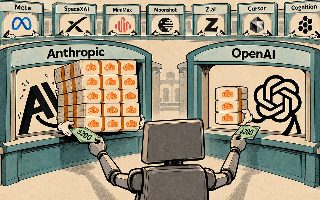
SemiAnalysis, in a study by Andrew Megalaa, Max Kan and Dylan Patel, says Anthropic subscriptions provide roughly four to five times the API-equivalent value of OpenAI’s for comparable mid-tier models. The analysis also finds that OpenAI halved limits on its $200 plan and that its new $500 plan offers only 21% more Astra usage than the former $200 plan.
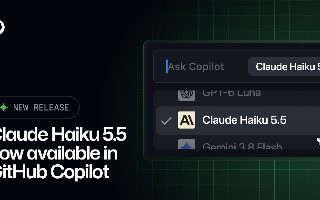
GitHub says Anthropic’s Claude Haiku 5.5 is generally available in Copilot for Pro, Pro+, Max, Business and Enterprise users, with a gradual rollout across supported IDEs, GitHub.com, mobile and Copilot tools. GitHub says early tests found it matched Claude Sonnet 5 on many coding tasks while using fewer tokens and steps; usage is billed at provider list prices.
Mitchell Hashimoto has proposed OSC 7501, a terminal-native protocol that lets programs report whether they are idle, working, finished, blocked, or failed, with optional progress and message details. He says the format could replace screen-reading heuristics and app-specific APIs used by tools such as agent inboxes, and reports prototype implementations in Ghostty, Rex, Terraform, Claude Code, Codex, and Homebrew.
GitHub says a Copilot SDK change caused some agent sessions in newer IDE versions to go unattributed, undercounting agent activity and lines of code in usage reports; some activity was instead counted as Copilot CLI use. A fix is available in Visual Studio Code 1.139.0 and later, with updates for Visual Studio, JetBrains, Eclipse and Xcode expected by November 2026; missing data cannot be recovered, and billing was unaffected.
GitHub says local sandboxing is generally available in Copilot CLI, the Copilot app, and VS Code sessions using Agent Host, at no extra cost. Powered by Microsoft eXecution Container, it applies developer- or organization-defined limits to agent tools’ access to files, networks, and credentials across Windows, macOS, and Linux.
OpenAI’s Codex 0.160.1 release fixes remote stdio MCP server launches with explicitly configured environment variables by preserving `SYSTEMROOT`, `TEMP` and `TMP`. The GitHub release notes say the change lets Unix hosts retain the Windows executor’s startup environment and backports the fix to the 0.160 branch.
Anthropic released Claude Code v2.1.292 on Oct. 6, adding a `--marketplace` option for plugin installs, effort controls for subagents, prompt autocomplete hooks and prompt caching for mods. The update also fixes numerous security, permission and reliability issues across local and cloud sessions, plugins, scheduled tasks and integrations.
OpenAI released Codex version 0.162.0-alpha.16 as a pre-release on GitHub on October 5. The release page lists commit 6cfcb98 and says 47 commits have landed on the main branch since the release.
Pi creator Armin Ronacher explains Codemode, a new Pi 1.0 feature that lets AI agents use sandboxed JavaScript in the trusted harness to compose tool calls, run workflows, and access model APIs without sending every step through the model’s context. He says it complements CLI tools and enables MCP use, but MCP support remains uneven because servers often lack structured, consistent results and adequate support for binary data and tool discovery.
Anthropic released Claude Code v2.1.291, fixing two regressions: cloud sessions dropping answers to permission prompts and session-ending messages being lost when quitting.