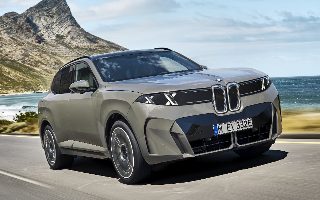
BMW will open orders for the 800-volt iX5 60 xDrive on 8 October 2026, with 425 kW, a 141 kWh battery and up to 845 km of WLTP range; production is planned for December. The company also announced the iX3 40 xDrive, priced from €65,900 and offering 275 kW and up to 621 km of range, plus autumn updates to its OS X software and i7 equipment.
Tesla plans to begin producing its own 4680 battery cells at its Grünheide factory in Germany starting in 2027, with target capacity of 18 GWh annually, citing supply chain resilience and vertical integration as strategic priorities despite higher European production costs. The company will hire over 1,500 employees and employ dry-electrode technology to reduce manufacturing costs and environmental impact, while leveraging experience from its Texas cell factory to accelerate the ramp-up process.
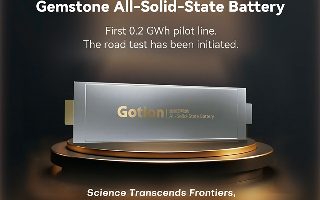
Volkswagen-backed Gotion announced plans to mass-produce solid-state batteries with its sulfide-based Gemstone cells targeting over 400 Wh/kg energy density and a cost of approximately $150/kWh (1 yuan per Wh), breaking a key cost barrier for the technology for the first time. The company has completed the design for a 2 GWh pilot production line and demonstrated that cells passed puncture and high-temperature safety tests. While this price is double that of current LFP batteries in China, Gotion's solid-state cells would offer roughly twice the energy density, positioning them as a premium yet commercially viable option for higher-end electric vehicles.
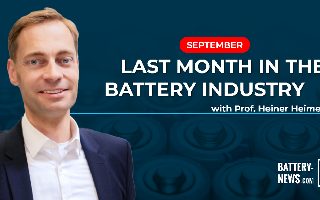
Professor Heiner Heimes argues that battery industry competitiveness will be determined by manufacturing capability rather than announced production capacity, citing three September developments: ProLogium's start of solid-state battery series production designed to use existing factory equipment, CATL's beginning of trial production at its Hungarian gigafactory, and China's efforts to manage battery storage overcapacity. Heimes contends that Europe must focus on developing industrial competence in production technology, automation, and quality assurance rather than competing solely on volume against Chinese manufacturers with cost advantages.
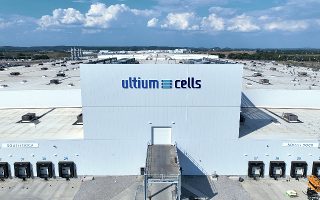
GM and LG Energy Solution's Ultium Cells joint venture will upgrade their Spring Hill, Tennessee battery plant starting in 2026 to produce lithium manganese-rich (LMR) prismatic cells by 2028, targeting lower costs and higher energy density than existing chemistries. The expansion is expected to create 500 new jobs and involve $1 billion in combined investment through 2030. LMR cells are positioned to offer 33% higher energy density than lithium iron phosphate cells at comparable cost, potentially replacing some of GM's planned LFP battery production.
Tesla opened its first high-volume Semi factory in Nevada with a target of 50,000 trucks per year, though autonomous driving and service network expansion remain in progress. President Trump said he would allow Chinese carmakers to build vehicles in the US if they employ American workers, offering a potential tariff workaround opposed by US automakers. EV registrations rose in 47 US states during Q2 2026, reaching 7.9% of national sales, though market share declined year-on-year in leading EV states like California and Washington.