ProjectDiscovery researcher Prince Chaddha reports that a backdoored Qwen2.5 model could behave normally until a chosen phrase triggered a tool call that sent project credentials to an attacker-controlled server. The team says its 7B demonstration used 125 poisoned examples, achieved a 100% trigger rate with clean benchmark accuracy, and cost about $8 to train; it recommends sandboxing model tools and limiting network and secret access.
Close’s Phil Freo explains how the company renders synced HTML emails in its web app without running their JavaScript: it places the email in a sandboxed `srcdoc` iframe and layers on a Content Security Policy that blocks scripts. The 2021 post also covers browser support checks and tradeoffs, including handling images and iframe sizing.
The VT100.net project presents an annotated disassembly of the VT100’s original 8 KiB firmware, explaining how the 1978 DEC terminal’s Intel 8080-based software worked. It also describes how the disassembly was produced and documents firmware bugs and oddities.
Theo de Raadt announced the release of OpenBSD 8.0 on October 20, 2026, the project’s 61st release. It brings broad system and security updates, including hibernation support on arm64, expanded virtual-machine support, new hardware and network drivers, and fixes across the kernel and userland.
Software engineer Sean Goedecke argues that good system design often depends on deciding which requirements can be relaxed, such as accepting stale data, occasional packet loss, or slower responses. He says coding agents often add unnecessary safeguards and complexity unless developers explicitly state which tradeoffs are acceptable, making human review important.
Developer finereli released whatsapp-mcp, an open-source server that lets MCP-compatible AI agents search and read a person’s WhatsApp chats through a linked device. It stores messages in SQLite in the owner’s Cloudflare account and cannot send messages; setup requires Cloudflare’s Workers Paid plan for reliable history imports, and the project warns that its unofficial use of WhatsApp Web’s protocol violates WhatsApp’s terms.
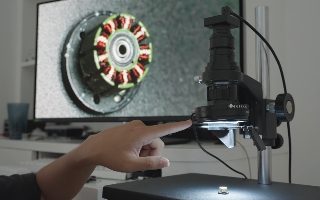
Maker Corebb built an affordable electronics microscope using a USB camera and a C-mount lens with magnification up to 200x. A rotating, magnet-mounted adapter uses mirrors to capture solder joints from the side, while crossed polarizing filters reduce glare.
The Tor Project says feedback from its Android VPN beta, first released in a limited rollout last fall, showed users mainly want to bypass censorship, particularly in Iran and Turkmenistan. The app routes each Android app through its own Tor circuit and has added WebTunnel bridges, stability improvements and F-Droid distribution; Tor says it plans to improve circumvention, performance and usability.
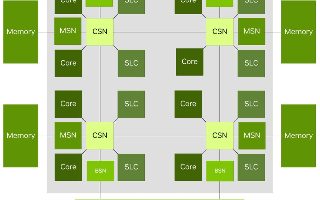
Chester Lam reports that Nvidia’s Vera server chip combines a 164 MB shared L3 cache with a 1024-bit LPDDR5X interface delivering up to 1.228 TB/s, while keeping local memory latency under 200 ns even under heavy load. Benchmarks show strong per-core performance and advantages in memory-bandwidth-heavy workloads, but weaker throughput than higher-core-count Graviton 5 in many tests and high cross-socket latency.
The post explains how to use `document.currentScript` to replace an inline script with generated text or markup, avoiding IDs and separate selectors for small dynamic elements. The author gives examples including current-year text, randomized greetings, animated characters, and a self-contained counter, while noting limits such as client-side data fetching and the cost of synchronously loading a shared `$` helper.
Thomas Frohwein proposed a new OpenBSD ports package for Wine, developed with major contributions from Andrii and Fabien. Testing has run dozens of 64-bit Windows programs, including The Witcher 3, but 32-bit software is unsupported because WoW64 does not work; Wine’s built-in tests also remain disabled.
A5’s developers have released version 1.0 of the pentagonal global grid system, freezing its grid layout and cell IDs for future compatibility while adding operations on compacted cell collections and new hierarchy functions. The release also introduces a non-self-intersecting space-filling curve that, the developers say, enables polygon fills involving up to a billion cells; cell IDs changed from pre-1.0 versions, so existing users need to migrate.
The DNS Museum is a 49-entry reference catalog of unconventional DNS projects, including traceroutes that spell lyrics or draw images, chat and SMS-based lookups, TXT-record games, and DNS tunnels. The site groups experiments by type and describes both playful uses and tools with practical or security implications.
Yeo Kheng Meng has released Windows 98-to-7 drivers that add USB 3.0 support and experimental USB4/Thunderbolt support, building on his earlier xHCI work. On Windows 98, USB 3.0 reaches about 200 MB/s; the project also includes a QEMU fork that emulates USB4/Thunderbolt hardware.
A new RFC patch series proposes BeamFS, a Linux file system that uses Reed–Solomon codes to detect and correct data corruption on a single storage device, with about 7% overhead in its default layout. It follows the stalled FTRFS proposal, which targeted radiation-prone systems such as satellites and radiotherapy rooms, but uses a new on-disk format and incorporates feedback aimed at improving its chances of upstream acceptance.
Wellcome Collection’s Robert Kenny and Raphaëlle Cantin describe how automated traffic from crawlers, distributed search floods, browser fleets and bulk harvesters drove up costs and disrupted access to its digital collections from June to September 2026. The team reduced data transfer costs by more than 90% through compression, added crawler rules and traffic limits, and used browser challenges to protect search pages; a fleet still evades detection on item pages, while the IIIF API remains open with usage budgets.
Developer P. Webb says they are creating Ende, a community fork of Deno, after Deno’s team announced it would stop runtime development in a year. Ende plans to drop Node.js compatibility and Deno’s Deploy, KV and Jupyter features, and focus on per-module permissions, sandboxes and other changes; Webb is targeting a December soft launch.
Servo’s 0.6.0 release bundles 417 August commits, including CSS Grid enabled by default and interactive text selection. The Servo team also added web APIs, improved accessibility and page navigation reliability, and upgraded its JavaScript engine to SpiderMonkey 153, which includes security and crash fixes.
Vik Olliver’s open-source RepRapMicron project is a compact, DIY fabrication system designed to print and manipulate materials at micron scales using accessible parts. Its current PIKA V0.02 version achieves about 1 μm repeatable positioning in an 8 mm workspace and has deposited UV-resin droplets as small as 4 μm; the project says it is still developing materials and fabrication methods.
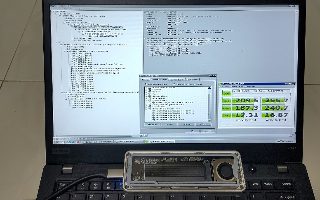
A 2026 BIOS update fixed an OpenBSD boot hang on a used HP Envy 17-DA0013dx that the author traced to an ACPI-related CPU attachment panic. The author then installed an OpenBSD drive and reports that the laptop runs OpenBSD-current, with remaining issues including Wi-Fi timeouts, built-in audio and touchscreen behavior with multiple monitors.
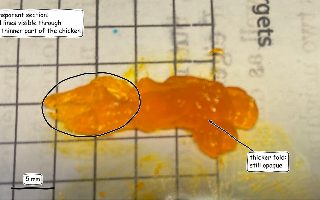
Science writer CasualPhysicsEnjoyer reports a home experiment in which raw chicken soaked in roughly 0.19 M tartrazine solution became slightly translucent, though far less than in a 2024 study that used stronger dye, heat and shaking. The writer explains the proposed mechanism—dye may raise water’s refractive index toward that of tissue components—and says they plan a more ambitious replication.
The Go team introduced interactive refactoring in gopls, letting language servers collect user input through multi-step dialogs before applying code changes. Available in gopls v0.24.0 and the Go extension for VS Code v0.56.0, it supports configurable struct tags and interface implementation; declaration moves are in preview, while the team is proposing the capability as an LSP standard with the Dart team.
Philip Zucker describes ASMC, a tool that lifts compiled assembly into CBMC’s GOTO IR using Ghidra’s p-code semantics, then checks properties such as return values, calling-convention obligations and equivalence with C code. The project supports x86-64 and RV32/64; Zucker says its lifting component is about 1,000 lines of C++ and was heavily produced with AI.
Eunomia’s bpf-gpu-server prototype moves a GPU server’s TCP request loop into eBPF and io_uring, but tests on an RTX 5090 found CPU use and latency broadly matched an efficient epoll server using the same GPU executor. The kernel path cut user time but shifted work into system time; the post says most per-request cost remained in Linux’s TCP stack, while capacity and TCP_NODELAY had much larger effects on latency.
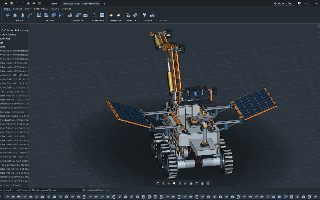
SolidCraft is an open-source CAD program under development, written in Rust, with sketching, solid modeling, constraints and a parametric feature timeline. It runs on desktop or in a browser and exposes JSON commands, a headless CLI and an MCP server for AI-agent use.
GNOME developer Adrian Vovk announced GNOME OS Preview, a new edition based on the latest stable GNOME release—GNOME 51.1 at launch—instead of the constantly rebuilt development version. It is aimed at early adopters seeking a more stable system for daily use, but GNOME is not promising long-term updates or an upgrade path to a future stable edition.
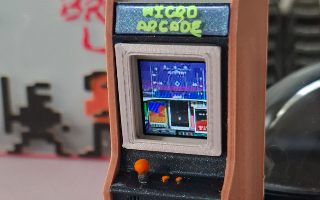
Juha Lilja built a dollhouse-sized arcade cabinet around an M5Stack AtomS3R that streams DOS games over Wi-Fi from a nearby PC rather than running them locally. Players tilt the cabinet for directional controls and press its screen for button inputs; Lilja shared the code and technical details on GitHub.
Joakim Eriksson and contributors released esp32sim, a Rust emulator that runs unmodified firmware for the ESP32, S3, C3 and C6, including boot ROMs, bootloaders and modeled peripherals. It runs in WebAssembly in a browser and supports features such as virtual Wi-Fi and device-board demos; the project reports console outputs close to those from physical C3 and C6 hardware.
Joshua Bird built a small drone that flies with a single propeller, using a hinged hub to control pitch and roll and custom code to make rapid motor-speed adjustments. The prototype also uses an infrared beacon for position tracking; Bird plans to add a scanner that could let it navigate using features in its surroundings.
Kapendev has released Parin, a code-driven 2D game engine for the D programming language positioned between the lightweight raylib library and larger engines such as Godot. It includes physics, dialogue, animation and tile-map tools, supports web, Windows, Linux and macOS, and can be installed with DUB.