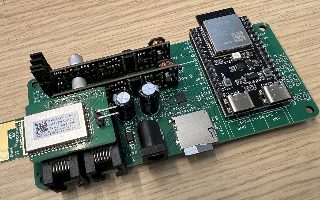
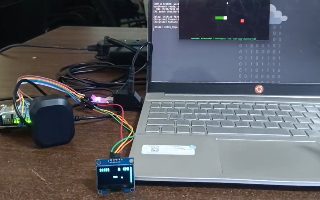
Scott Dylewski built the Analog Redial, an open-source system that lets two vintage landline phones make calls to each other, connect through a SIP server, or use an answering machine. It runs on an ESP32-C6 with an ES8388 audio chip and supports web configuration, Home Assistant dial codes, and an optional Bluetooth board for using an old phone as a smartphone handset.
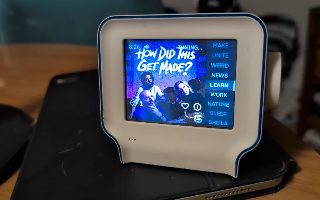
Brendan Fitzpatrick built a native C client that turns a 2009 Chumby One into a player for Static Radio, an online station made up of podcast content. It boots from USB without modifying the original firmware and adds modern TLS, audio decoding and buffering for smooth crossfades between stations.
Tyrtulia is a passwordless, headless forum for small Unix-hosted communities, created by Andros.dev as a modern adaptation of BBJ. It uses Unix identity over a local socket or signed SSH challenges, and offers features including Markdown threads, notifications, search, edit history and moderation through a REST API and terminal or Emacs clients.
The Foss Comics story traces BSD’s early development at UC Berkeley: Bill Joy assembled the first Berkeley Software Distribution in 1977, then created 2BSD with tools including vi and the C shell. It also recounts how Joy and graduate student Ozalp Babaoglu added virtual memory to VAX Unix, producing 3BSD, which began shipping in December 1979 and drew interest from DARPA.
Palm OS developer Aaron Ardiri has published his personal archive of development tools, source code and documentation after reconnecting with enthusiasts still exploring the platform. He says preserving these materials records how engineers built software under the constraints of early mobile devices and helps retain knowledge lost when companies and platforms disappear.
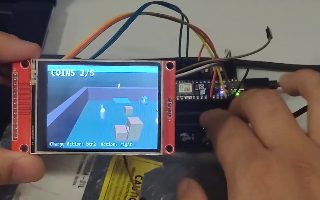
Fedyfausto released Jet Studio, an open-source, Godot-based game editor for making 2D and 3D games on an Arduino Nano ESP32 or STM32F746 with an ILI9341 display. A 2D shooter demo runs at 62 FPS on the Nano ESP32 and 83 FPS on the STM32; other demos include a 3D physics simulation and an Outrun-style game.
Nolan Lawson benchmarked AI agents building the same Pokémon app in 12 JavaScript frameworks, measuring build cost, time, code size, and Lighthouse results across three to five runs per framework. Hono with htmx was cheapest and produced the fewest lines of code, while Astro had the lowest JavaScript transfer and tied several frameworks for top Lighthouse scores; Lawson cautions that the small, content-focused app and variable agent runs limit what the results show.
Karthik Chikmagalur describes a ground-up rewrite of Org mode’s LaTeX preview system, developed with Tecosaur and now included in Org’s development branch. The new feature generates previews asynchronously, offers live updates as users edit math, and improves speed, theme matching, alignment, equation numbering and error reporting.
Solène introduces braindead-local-intelligence, a project that uses rootless Podman containers to run local language and image models, web search and an Open WebUI interface on Linux. It loads one model at a time to conserve GPU memory and targets AMD graphics cards; the default models require about 8 GB of storage, with the smallest needing roughly 4 GB of VRAM and 8 GB of RAM.
Buzz-language’s 0.6.0 release presents Buzz as a statically typed, JIT-compiled language with C interoperability and cooperative fibers. The release page’s sample shows fibers yielding task scores and resolving a completion message.
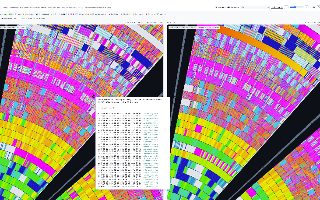
Marko Ivankovic has released OmniDiff, an open-source Rust tool that integrates with Git and Jujutsu to show content-aware diffs for code and formats including images, fonts, archives and PDFs. Its benchmarks report that 99.95% of 442,530 code-file changes completed successfully, while the tool’s accuracy targets are not yet met.
Developer Kevin has released phoria2, an open-source JavaScript library for building 3D web scenes with WebGL 2. It includes features such as PBR materials, instancing, labels, shadows and glTF support, with no runtime dependencies; the project is MIT-licensed and offers documentation and a React example.
[0ldStaph] created FloppoScope, a browser-based tool that runs locally to analyze floppy disk images and flux files across formats including PC, Apple, Amiga, Atari DOS, and BBC Micro. It maps disk layouts, previews common file types, converts image formats, and reports bad sectors and corrupted files.
KDE developer Eike Hein is developing Kwi, an experimental terminal emulator built on Ghostty’s libghostty-vt and KDE Frameworks, with OpenGL or Vulkan GPU acceleration. Hein says it is 3 to 35 times faster than Konsole in some benchmarks, but Kwi has no 0.1.0 release yet and is not proposed as a replacement.
Parameter’s security research team says it exploited a flaw in ChatGPT’s shared conversations to run JavaScript in a victim’s signed-in session, read private conversation data and send it to an external server. The attack required opening a public share link; OpenAI fixed the issue on October 26, 2026, and awarded the researchers $5,000.
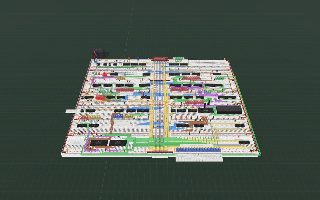
BBRouter hosts a public, read-only 3D breadboard simulation of Ben Eater’s SAP-1 8-bit computer, with a sample RAM program and controls for inspecting and running the circuit. The page also describes BBRouter’s MCP server, which lets AI apps access and modify a user’s projects after sign-in.
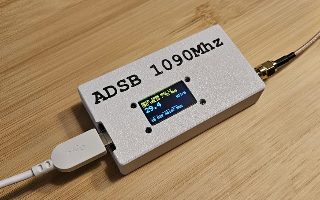
Maker [thefatmoop] built an ADS-B receiver for under $50 using a Meshnology W12 board with an ESP32-S3 and LR2021 radio, which captures 1090 MHz aircraft signals and displays tracks on a web interface. With a 915 MHz antenna and modified filter settings, the rig reportedly receives aircraft from up to 150 nautical miles away.
The Computer.rip essay argues that DLNA’s flexible, open home-media system failed because consumers lacked reliable home networks and local media libraries, while its products were complex and poorly marketed. Cloud streaming and Apple’s AirPlay and Google’s Chromecast then displaced it with simpler, proprietary casting systems; the author says Sonos improves audio synchronization but offers a more limited, vendor-controlled alternative.
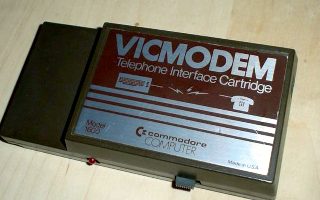
Dave Farquhar recounts how Commodore and modem maker Anchor Automation sold the 300-baud VICModem for under $100 in 1982, using a Motorola MC14412 chip and other cost-saving design choices. The modem connected directly to a phone line but could not dial, so users had to make the call themselves; a bundled adapter cable addressed incompatible handset connectors.
Aatish Bhatia and Arkarup Banerjee use interactive simulations of four-neuron “sparks” to show how simple changes in neural connections can make a creature turn toward or away from light, stop near it, and develop different light preferences. The examples are based on neuroscientist Valentino Braitenberg’s thought experiments and illustrate how behavior can emerge from neural circuits.
Koppar published the Rev B design files for a 4-layer USB-C LTE modem board built around Quectel’s EC25-EUX module. It is designed to provide a computer with LTE data, SMS and voice calls, routing call audio through a USB sound card; the board is being ordered, and firmware and call testing are still to come.
The Go Security Team says CVE-2026-98432 is a Linux kernel use-after-free affecting IPv4 TCP handling; an exploit demonstrated by Anthropic achieved remote code execution against a server with an MPTCP listener. It recommends upgrading to a patched kernel, noting Go 1.24 enables MPTCP by default on Linux and offering `GODEBUG=multipathtcp=0` as a fragile, program-level mitigation.
Mozilla’s Bobby Holley says Firefox has shipped more than seven times as many security fixes since February as in the same period of 2025, aided by early access to models from Anthropic and OpenAI. To counter AI-assisted attacks that exploit the delay between a fix being released and reaching most users, Firefox is speeding up releases, withholding regression tests temporarily and plans to stagger fixes across sandbox layers so their exposure windows do not overlap.
Jepsen tested Orkes’ single-node ParticleDB versions 1.1.4 through 1.1.18.11.rc-22 and reported 96 issues, including crashes, deadlocks, incorrect query results, and violations of database constraints. The report says many faults occurred without failures or concurrency, and notes that several were fixed in later releases; it did not test replicated clusters.
The Consensus Labs released noalloc, an experimental Go tool that checks whether marked functions and their call trees allocate on the heap, and reports allocation sites. The repository also provides fixed-capacity data structures and generated JSON encoders and decoders designed to avoid allocations; it requires Go 1.27 or later.
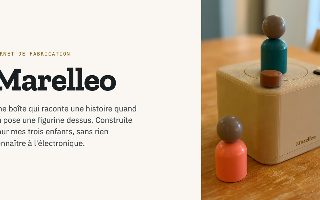
A maker built Marelleo, an open-source, screen-free story player for his children, using an ESP32, NFC-tagged wooden figures and a custom circuit board. Unlike commercial Toniebox-style players, it lets families assign their own MP3s, M4A files or internet radio streams to figures; the builder published the hardware, firmware and instructions under an MIT licence.
Arterialist has released kube32, a Kubernetes-compatible control plane and WebAssembly runtime for ESP32-S3 microcontrollers. It lets users manage boards with standard tools such as `kubectl`, run Wasm pods, and route services; the project also includes a multi-node simulator for macOS and Linux.
Infinite Mac creator Mihai Parparita has added several PowerPC versions of BeOS to the browser-based emulator, where users can boot the systems, try bundled software, load CD-ROMs and save work. Making BeOS run exposed hardware-emulation bugs in DingusPPC, which Parparita and its maintainers fixed; he says it is now the only emulator able to run PowerPC BeOS.
Drew Breunig built an NES emulator into the weights of Qwen3.5-4B, allowing games such as *Super Mario Bros.* to run very slowly inside the model. The project, inspired by Divyansh Agrawal’s qwenputer, used a 15-year-old NES CPU conformance test suite by Christopher Pow.
[M_Jagadeesh97] built a custom RISC-V retro gaming system on a Terasic DE0-Nano FPGA board with 32 MB of RAM and a launcher offering 32 games. The system renders at 64×32 pixels to maintain retro game aspect ratios and achieves 45 frames per second; the project writeup covers its CPU, video timing and raycaster design.