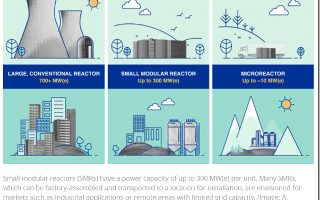
Following the hardware race in advanced fission and fusion: small modular reactors, microreactors and private fusion startups, with a focus on US projects and the engineering behind them.
Hitachi said its nuclear division’s revenue rose 48% year over year to ¥65.3 billion, about $415 million, in the second quarter, according to results published October 28. The report also says the company’s first small reactor delivery is nearing, but the excerpt provides no details on its timing or customer.
General Fusion said it will release its third-quarter 2026 financial results and business update after market close on November 16, followed by a conference call at 5 p.m. Eastern. The Vancouver-based fusion company said the webcast will be available through its investor relations site, with a replay accessible for 12 months.
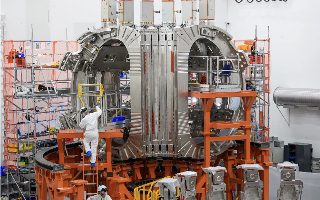
Commonwealth Fusion Systems says it will present plans at the American Physical Society’s Division of Plasma Physics conference for operating its SPARC tokamak toward Q>1, when fusion output exceeds the energy used to sustain the fusion process. The company is evaluating multiple operating configurations, including low-confinement mode at a 12.2-tesla magnetic field and high-confinement mode at 8–9 tesla; CFS says SPARC is being assembled and is expected to turn on next year.
Merula says that people who want a COVID-19 vaccination but were not invited can still book one through the GGD appointment website. She says the site’s list of eligible groups may be misleading because it notes that anyone who wants a shot can make an appointment.
The NRC staff’s final safety evaluation recommends that the Commission approve a construction permit for Long Mott Energy’s proposed Long Mott Generating Station in Calhoun County, Texas. The project would consist of four X-energy Xe-100 reactors, producing 800 megawatts-thermal (320 megawatts-electric) to supply electricity and process steam to Dow Chemical’s Seadrift Operations, with surplus power sent to the grid.
Emil Jacobs of Collectifission recalls switching from Windows XP to Red Hat 9 in 2003, saying Linux felt much faster despite a sound-configuration problem that took months to fix. He also argues that XP computers could remain slow after login, while Vista improved startup usability, and says nostalgia glosses over those drawbacks.
A Gentoo Linux user says they created a Signal ebuild for an M2 MacBook Air running Asahi Linux, but have not submitted it because its NPM dependencies rely on a tarball they host. They report that ebuilds for the mail client Convey and GNOME RSS reader NewsFlash were accepted into Gentoo’s GURU repository, an OnlyOffice 10.0 ebuild entered the main portage tree, and an Audacity 4.0 update is in progress.
South Korea’s state-run KHNP has ended construction-contract talks with a Daewoo Engineering & Construction-led consortium for two APR1000 reactors at the Czech Republic’s Dukovany site, a project valued at $18.6 billion. KHNP cited unresolved contract terms, including construction costs and responsibility for design changes, and plans a new tender; the consortium says revised terms gave it only about three weeks to respond and has called for talks to resume.
Researchers at General Atomics’ DIII-D facility have reported the first experimental confirmation of helicon current drive, an approach that could help tokamaks sustain steady-state operation without relying on a pulsed central solenoid. Their Physical Review Letters study found the waves were absorbed as predicted and drove plasma current; further tests at higher power and in other plasma regimes are needed to assess its usefulness for power plants.
The Fusion Report’s October 30 roundup highlights Commonwealth Fusion Systems’ letter of intent for up to $85 million in CHIPS funding for fusion-related semiconductor research, and Blue Laser Fusion’s $34 million financing for defense prototypes and fusion development. It also covers Japan-Germany fusion agreements, including stellarator cooperation between Helical Fusion and Gauss Fusion and supply-chain memorandums involving Proxima Fusion, Fujikura and Kyoto Fusioneering, plus articles on AI’s economic outlook and pulsed-power systems.
Centrus has shipped the first advanced centrifuge made at its Oak Ridge, Tennessee, facility to its Piketon, Ohio, plant, where it will be assembled into new enrichment cascades. The expansion, backed by a US Department of Energy task order worth up to $1.07 billion, aims to add commercial-scale HALEU production capacity, with the first new capacity expected online in 2029.
X-energy said the U.S. Nuclear Regulatory Commission completed its safety review of the proposed Xe-100 reactor at the Long Mott Generating Station, a project planned with Dow in Texas. The NRC’s final safety report, alongside a completed environmental review, clears two main reviews needed for a construction permit, but the permit itself remains under review.
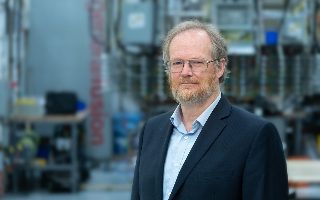
General Fusion says founder and Chief Science Officer Michel Laberge is moving to a founder emeritus role, where he will advise the company while spending more time on other interests. The company also highlights its LM26 machine’s reported plasma temperatures above 12 million degrees Celsius and says technology chief Mike Donaldson will continue leading development as it targets 100 million degrees.
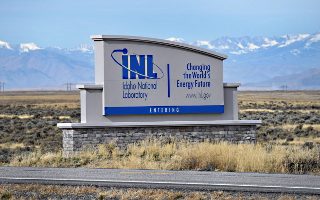
Radiant said the U.S. Department of Energy approved the safety analysis for full-power operations of its Kaleidos microreactor, allowing the company to proceed to a readiness review before nuclear operations can begin at Idaho National Laboratory. Radiant plans to test the reactor from first criticality through at least 150 hours of continuous full-power operation, as part of a campaign that will run for up to 60 effective full-power days.
U.S. Energy Secretary Chris Wright visited Holtec International’s Palisades nuclear plant in Michigan as the company advances plans to restart it. The 805-megawatt plant has completed fuel loading and is undergoing testing, inspections and readiness work; it will resume operations only after meeting Nuclear Regulatory Commission requirements.
DOE cleanup chief Tim Walsh and executives from Orano, TRISO-X, Radiant Industries and Kairos Power presented Oak Ridge’s East Tennessee Technology Park as a growing nuclear-energy hub, with the projects representing more than $15 billion in estimated investment. Their facilities are at different stages, and company representatives and Walsh cited potential local employment, including about 1,000 expected Radiant positions and roughly 10,000 construction workers needed across the site over five years.
Korea Hydro & Nuclear Power (KHNP) has begun terminating its cooperation agreement with construction partners Daewoo Engineering & Construction and Doosan Enerbility after they failed to agree on subcontract terms for the Czech nuclear project. KHNP plans to select a replacement contractor by July 2027; Doosan says it intends to bid again, while its reactor and turbine equipment supply contracts remain in effect.
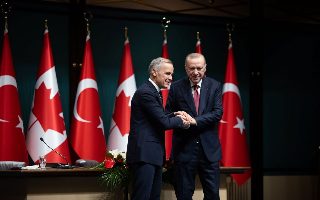
Canada and Turkey signed a strategic partnership covering civil nuclear cooperation, while AtkinsRéalis is studying whether its CANDU reactors could be built at Sinop; Prime Minister Mark Carney said Turkey has “good chances” of selecting the technology, though competitors remain. The Philippines may receive up to $5 billion in U.S. loans for nuclear development, and Thailand’s draft power plan targets its first 300-MW small reactor by 2037 and 9,000 MW of small-reactor capacity by 2050.
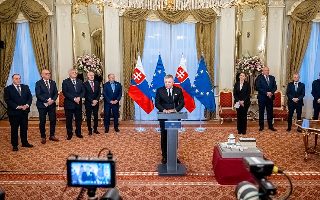
Westinghouse will conduct a six-month front-end engineering and design study to assess whether its AP1000 reactor is suitable for the planned new unit at Jaslovské Bohunice in Slovakia. Funded partly by a US State Department grant, the study will examine site conditions, permits, costs and scheduling; Slovakia aims to complete the project by 2040.
The Department of Commerce selected fusion companies Helion and Commonwealth Fusion Systems for up to $175 million and $85 million, respectively, in CHIPS and Science Act awards to develop semiconductors and power electronics for fusion systems. The awards would give the department minority, non-controlling, non-voting equity stakes in both companies; Helion says its funding would be paired with $225 million in private investment.
University of Western Ontario researchers found silicon-rich regions in both bare uranium oxycarbide kernels and unirradiated TRISO particles, showing the silicon was present before reactor exposure and was not introduced by the coating process. Their study suggests fabrication or uranium feedstock as possible sources, but the silicon’s effect on fuel performance is unknown; Idaho National Laboratory’s Paul Demkowicz cautioned that the kernels studied differ from those used in the AGR program.
Elliot Marsh of NeutronRise argues that South Korea’s shortage of nuclear safety reviewers and standards for advanced reactors could delay SMR licensing, despite strong designs and a track record of building large reactors. The Nuclear Safety and Security Commission expects advanced-SMR review standards by 2032, while developers plan permit applications in 2028–29; the government’s power plan targets about 700 MW of domestic SMR capacity by 2035.
UK startup Zenithon, founded by Alex Higginbottom and backed by a recently raised $10 million, says its physics-grounded AI models can assess about one million design points in the time a conventional simulation takes to assess one. Its initial focus is fusion-plasma modeling, with plans to serve aerospace and semiconductor engineering too; the company’s speed and accuracy claims, including use of experimental data at commercial scale, still require validation.
Deep Fission signed a definitive power purchase agreement with the Great Plains Development Authority to pursue a commercial project at its Parsons, Kansas, site, targeting 150 megawatts by 2028 and up to 2,000 megawatts in later phases. The deal follows a short-seller report questioning the company’s viability; Deep Fission has called the report misleading and says it is evaluating legal remedies.
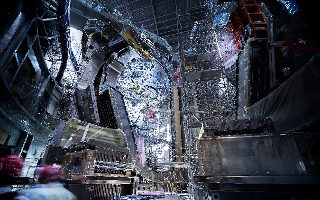
German photographer Jan Hosan returned to ITER for the third time to document progress on tokamak assembly. Hosan, whose science and industrial photography spans more than 70 countries, says his interest in fusion research has grown through photographing reactors for the Max Planck Institute for Plasma Physics and magazines.
Michael Heumann’s article explains how pulsed-power systems store energy and release it in brief bursts to drive fusion, then focuses on impedance-matched Marx generators (IMGs) for inertial fusion. It describes Pacific Fusion’s planned demonstration system, which aims to combine IMG modules to deliver over 60 MA and more than 8 MJ to a MagLIF target in a roughly 100-nanosecond pulse, while noting that commercial use depends on improving efficiency, reliability, component lifetime and firing rates.
The US Department of Energy is funding an accelerated final stage of the Molten Chloride Reactor Experiment, a collaboration involving Southern Company, Idaho National Laboratory and Core Power. The experiment aims to become the first fast-spectrum molten chloride reactor to reach criticality, producing operating data to inform future reactor design and licensing; INL says a 2024 process breakthrough enabled full 18-kilogram fuel-salt batches at 95% uranium conversion.
DARPA awarded SpaceNukes an agreement to design, build and ground-test an autonomous kilopower reactor with Los Alamos National Laboratory under its Fat Cat program. The project builds on NASA’s 5-kilowatt KRUSTY reactor test, adding active control-rod operation to its passively controlled design.
GE Vernova executive Eric Gray said small modular nuclear reactors could give Southeast Asia a strategic advantage, particularly if their power can be integrated into the Asean Power Grid. The excerpt provides no further details on the proposal.