The post explains Go’s experimental SIMD packages, `simd/archsimd` in Go 1.26 and portable `simd` in Go 1.27, with examples of vector operations and how the compiler maps them to CPU instructions. Its dot-product example reports about a ninefold speedup over a scalar loop on the author’s AMD Ryzen AI Max+ 395, while noting that SIMD is experimental and gains depend on the workload.
A GitLab project by c4psu13 releases a firmware-specific rooting toolkit for the TCL QLED 50C721 running BeyondTV6 firmware V8-R51MT02-LF1V903. It uses CVE-2022-22706 and Realtek memory access to obtain root, alter SELinux and apply device tweaks; the project reports a historical success but says it has not been freshly tested and is not a universal TCL tool.
Linux 7.4 will include a workqueue optimization by kernel developer Tejun Heo that checks only queues used since the previous flush, rather than scanning one queue per possible CPU. On a 192-CPU system, idle per-CPU flushes rose from 40,000 to 4.2 million per second; the change addresses overhead reported by Huawei engineer Yao Kai, including in XFS log forcing.
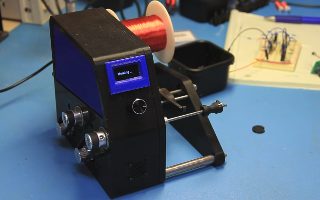
Larry built an automated coil winder for the electromagnetic coils in his flip-dot display, where each dot needs two coils. A Teensy-controlled pair of stepper motors winds the wire and moves a guide carriage across the bobbin; the mostly 3D-printed machine also uses adjustable foam tensioning and tracks coil layers.
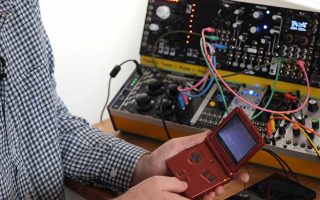
Andy has built a synthesizer that runs on an unmodified Game Boy Advance, loading custom software into the console’s RAM through its multiboot feature. The setup sends audio through the headphone jack and offers controls on both the GBA and a connected computer.
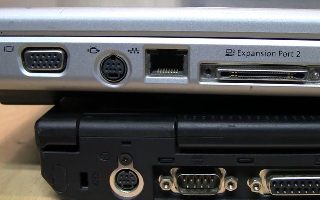
VWestlife’s survey of early-2000s laptop video ports found that many seven-pin mini-DIN “S-video+” connectors added composite video and two S/PDIF audio pins to standard S-video, but pinouts varied by manufacturer. Apple’s PowerBook G4 used a different layout, omitting the audio pins and placing composite video on pin 5.
Aikido Security reports that CVE-2026-111497, the critical “node2shell” flaw in Google’s Brotli decoder, also affects Python packages Brotli 1.2.0 and earlier and brotlicffi 1.2.0.x, as well as other software using the decoder. Crafted compressed data can trigger memory corruption, potentially enabling data leaks, crashes or code execution; fixes include Brotli 1.2.1, Brotli for Python 1.2.1, and brotlicffi 1.2.1.0.
Game programmer Lars reports that the original SimCity ran on a 16 MHz Intel 386SX by spreading updates to traffic, fire, crime and other systems across frames rather than recalculating them all every frame. He examines the game’s open-source Micropolis code and compares the technique with Assetto Corsa’s staggered cubemap updates and Unreal’s Lumen lighting.
The author describes using a Linux memory-backed file (`memfd`) and a `MAP_PRIVATE` mapping to create copy-on-write duplicates without initially allocating extra physical memory. In a test, a 32 MiB mapping and its duplicate used 32.004 MiB of physical memory; writing to the duplicate allocated only the modified 4 KiB page.
Clojure developer Alex Miller? announced neorepl 0.1, a terminal REPL and command-line client for any nREPL server, designed to bring CIDER-style tools to terminals and coding agents. It supports JVM Clojure and babashka, can start servers for Leiningen, deps.edn, babashka and shadow-cljs projects, and offers commands with structured output; the author says it is about 3,300 lines and has no middleware of its own.
The Wild linker’s maintainers released version 0.11.0, enabling WebAssembly linking by default (though debug information is not yet supported) and expanding GNU linker-script support enough to link Linux kernel modules. The release also advances the unfinished Mac port, adds many linker features and fixes, and caps default threading at 32 to avoid performance problems; building it now requires Rust 1.99.0.
Philip O’Toole, creator of rqlite, traces distributed SQLite projects from rqlite’s 2014 launch through systems including dqlite, Litestream, LiteFS, cr-sqlite, and Turso. He argues they address three distinct needs—strongly consistent clusters, low-cost disaster recovery, and multi-writer merging—and says the idea remained open source for years before hosted services attracted major investment and acquisition.
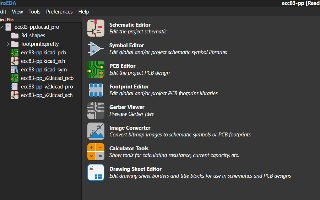
Akshay Rukade created ZiroEDA, a browser-based TypeScript port of KiCad 10.0.6 that includes schematic and PCB editors, interactive routing, and electrical and design-rule checks. It can open and save KiCad project files; compatibility tests reportedly produced zone fills with vertices identical to KiCad’s, though the project is still a work in progress with some dialogs missing.
The author describes a personal Emacs folding setup on Emacs 32.0.50 that uses kirigami to route one set of commands to Tree-sitter, Hideshow, Outline, and Org. They also customized fold indicators and Org redraw behavior, saying the result avoids duplicate markers and stays responsive in large files.
Jared Hulbert of Bitflux says his DiskArray, a sorted-key data structure that stores 4 KiB extents on eight NVMe drives and keeps only an index in RAM, can outperform an AVL tree at large scales by batching and pipelining disk operations. In his tests, DiskArray handled 670,000 inserts per second at 2 billion keys using 264 MiB of RAM, while the AVL tree needed 144 GiB and managed 320,000 inserts per second; pipelined in-RAM B+tree and NextArray designs were faster, but used much more memory.
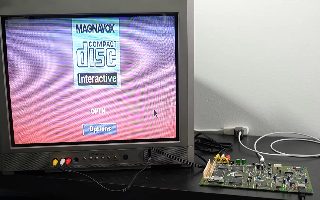
MattKC designed a USB-C power board for the Philips CD-i, replacing its failure-prone 8P8C-connected supply. The board negotiates 9 V from a USB-C charger, converts it to 5 V at up to 5 A, and generates the console’s required -5 V line.
Cloudflare has launched Origin Range Requests, a self-service feature on all plans that uses fixed-size cache chunks to serve partial requests for large files, replacing customer-configured range sizes. The company says the change roughly halved R2’s p99 time to first byte and reduced tiered-cache traffic for R2 and similar workloads by about 6%; customers can enable it with a Cache Rule.
Anubhav Malhotra’s R2D2 project replaces a webOS TV’s home screen with a local interface and adds a private browser and push-to-talk voice assistant. A Linux host runs Chromium and local speech and intent models, while the TV displays the session and sends remote input; the root-level TV modifications are validated only on one firmware build and may make the TV unusable.
The post explains how dynamic-language runtimes use object shapes, also called maps or hidden classes, to speed up attribute access compared with hash tables. It walks through a Python implementation and inline caches, drawing on work by CF Bolz-Tereick, then sketches how shapes are laid out in C++.
The OrgWebAlchemy author reports new Markdown rendering and broader Org support in the Guile library, alongside profiling-driven parser changes. Parsing a 58 KB README now takes 5.1 ms and allocates 3.9 MB, compared with 32.2 ms and 30.3 MB before; a separate scanner and linear-collapse rewrite also addresses a long-line slowdown that previously grew quadratically. The author says the changes were checked with 155 test definitions, 281 assertions and equivalence tests on about 70,000 inputs.
Roc developer Richard Feldman reports that, after optimizing Niclas Ahden’s pure-Roc DEFLATE library, roc-deflate ran a median 8.9% slower than the C library libdeflate on an AMD Ryzen 9 3900X and 2.6% slower on an M1 MacBook Pro across 144 benchmarks. Feldman says the result shows a memory-safe, automatically managed functional language can approach highly tuned C performance, while noting the comparison covers one workload and Roc’s performance gap varies by input.
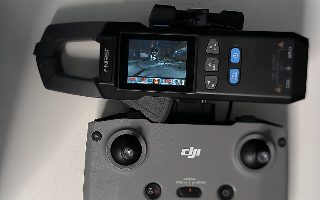
Artur Bieniek ported the doomgeneric engine to the $30 FNIRSI DMC-100 clamp meter, which runs an Artery AT32F415 chip with 32 KB of RAM. The port plays all nine levels of Freedoom: Phase 1’s first episode on the meter’s 320-by-240 color display, with buzzer sound effects and controls mapped to a DJI RC-N1 drone controller.
Marathon Recompiled developer Isaac Marovitz examines visual features cut or disabled in *Sonic the Hedgehog* (2006), including advanced shaders, shadows, point lights and multiplayer reflections. He says many assets and effects remain in the game files, but performance cuts and rendering bugs prevent them from working properly; the recompiled project has partially restored some features.
Radio amateur DO3RB has published an open-source wireless network transceiver for the SAMD21 microcontroller and RFM12B radio module. It sends ordinary network packets at 56 kbit/s over hundreds of meters, using run-length-limited extended Golay codes to improve reliability; the author reports 0.075% packet loss across 10,000 pings over two hours.
KeePassXC 2.8.0 has been released with a migration from Qt5 to Qt6, Wayland Auto-Type, configurable keyboard shortcuts, and remote database synchronization through external tools. The release also adds quick unlock options for macOS and Linux, native ARM64 builds for Windows, and an experimental ARM64 Linux AppImage.
The post describes a Hare hack for retrieving `errno` without a C wrapper: redirect standard error to a temporary file, capture `perror`’s message, and match it against strings collected with `strerror`. The author, Sebsite, also proposes probing `lseek` with different `whence` values to avoid assuming `SEEK_SET` is zero, while noting the approach relies on several awkward workarounds.
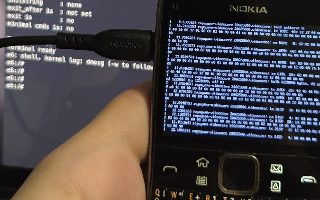
Hacker [fluffleswaffled] has booted Linux on a Nokia E6 by using a Symbian app to load the kernel into memory, bypassing the phone’s locked bootloader. The screen, keyboard and touchscreen work, but the phone resets within minutes; [fluffleswaffled] suspects the baseband chip is restarting it after the Symbian mobile stack stops.
OOSEX GANG’s HackiOS project boots a patched XNU kernel and iOS 16.5 user space on a POCO X5 Pro 5G or in QEMU, using custom loaders and replacement drivers. The research build supports features including Wi‑Fi, sound, camera previews, and many built-in apps, but cellular, Bluetooth, Apple ID sign-in, and video recording do not work; on the phone it runs temporarily from RAM without flashing Android storage.
Solène describes a Caddy reverse-proxy setup that keeps Immich and Nextcloud behind a VPN while exposing only tightly matched routes for share links. For each request, Caddy asks the service whether the link token is valid, forwards valid requests, and returns 404 for other routes; recipients can open shared content without a VPN or account. The post gives example configurations and notes that app updates can break the route rules and that vulnerabilities in exposed share routes remain a risk.
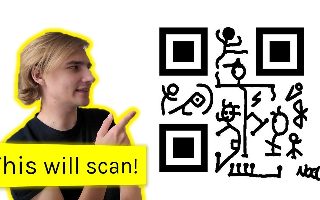
Noel Friedrich’s guide explains how to copy and decode QR codes by hand, covering versions 1–5 and showing how error correction can be used to interpret the data. It also demonstrates how QR code generation can be exploited to create artistic, partly human-readable designs.