Following the hardware race in advanced fission and fusion: small modular reactors, microreactors and private fusion startups, with a focus on US projects and the engineering behind them.
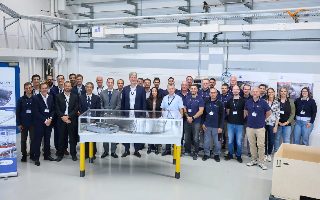
Research Instruments in Germany has completed the first production inner vertical target for ITER’s divertor, after more than a decade of development and qualification coordinated by Fusion for Energy. Europe must supply 58 targets; Research Instruments is contracted to make 28 and France’s ALSYMEX 13.
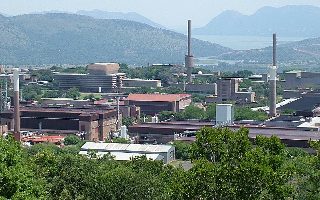
Quantum Leap Energy and South Africa’s Necsa have signed a binding agreement to form a joint venture to produce high-assay low-enriched uranium (HALEU) at Pelindaba, with Quantum Leap owning about 80% and leading operations and financing. Necsa will provide site access and regulatory support; Quantum Leap says it has secured expected production offtake through agreements with TerraPower.
Centrus Energy acquired Westerman Holdings, a major supplier of components for its uranium-enrichment centrifuges, for about $116 million, financed with $95 million in cash and $21 million in equity. Centrus said bringing Westerman’s 400 employees and four facilities in-house will strengthen its supply chain, support planned US enrichment expansion, and broaden revenue through Westerman’s non-nuclear customers.
Rosatom signed a deal to supply electricity to northern Halmahera Island in Indonesia using two floating nuclear power units with a combined capacity of 200 MW, which it expects to be operating within five years. The Russian state nuclear corporation called it the first export agreement for electricity from a floating power unit; Indonesian partner PT Pembangkit Listrik Nuklir said the project would be funded by private investment rather than Indonesia’s state budget.
X-energy and American Electric Power signed an agreement to assess a proposed 960-megawatt, 12-reactor Xe-100 plant near the retired Breed Generating Station in Sullivan County, Indiana. Amazon will provide milestone-based development funding; the project is a proposal, with feasibility work still ahead.
Kairos Power secured $643 million for its Hermes 2 demonstration reactor in Oak Ridge, Tennessee: $368 million from investors including Google Ventures and DCVC, plus $275 million from the U.S. Department of Energy. CEO Mike Laufer told Bloomberg the funding will support reactor development and expand Kairos’s manufacturing capacity in New Mexico; Samsung C&T has separately agreed to provide up to $100 million through investment and engineering services.
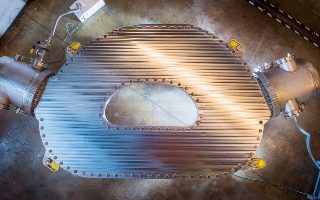
Commonwealth Fusion Systems said it sees energy and human creativity—“gray matter”—as the two markets that will matter most in the future. The company posted the remark in connection with TechCrunch Disrupt.
Virginia researchers and officials are using a symposium at William & Mary to build collaboration around commercial fusion, as the state faces rising electricity demand from data centers. They point to a proposed fusion plant near Richmond and fusion’s inclusion in Virginia’s energy plan, while noting that engineering challenges and costs remain unresolved.
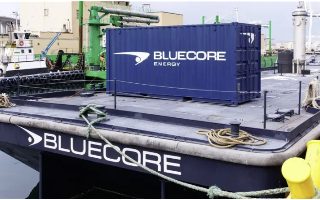
Bluecore Energy, a Long Beach startup developing floating nuclear power plants, has purchased its first uranium hexafluoride supply, enriched to 4.95% uranium-235, for future fuel fabrication and testing. The company says its first barge-mounted system is designed to produce about 10 MW of continuous power, and the purchase follows its recent $50 million seed funding.
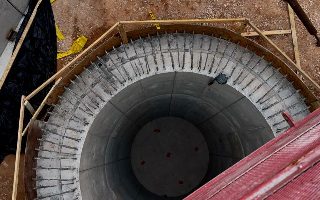
SGE and Polish power company ZE PAK have formed a joint venture to develop six GE Vernova Hitachi BWRX-300 small modular reactors at ZE PAK’s former coal plant in Pątnów, a proposed 1,800-MWe project. ZE PAK will contribute land and may later retain a minority stake or sell its shares to SGE.
Newcleo has opened the FASTER engineering and testing centre near France’s Marcoule nuclear site to develop manufacturing technology for mixed-oxide (MOX) fuel. Seven facilities are operational, testing processes including powder dosing, pellet handling and fuel-pin assembly; the company says the centre will help prepare its planned MOX plant and fuel for lead-cooled fast reactors.
The item appears to be a headline saying a UK atomic energy body believes Western countries are competing with China to develop fusion energy. The supplied text provides no further details about the body or its claims.
Thorizon and Dutch research institute TNO have launched a materials programme to test and model how reactor components withstand the heat, corrosive salts and radiation in Thorizon’s molten salt reactor design. The work will support licensing of the Pioneer demonstrator in Petten and help establish the lifetime of Thorizon’s replaceable fuel cartridges, which are designed to be changed every five to ten years.
Oklo plans to build Groves-2 Forge in Texas, using lessons from its Groves test reactor to add isotope irradiation and processing, initially producing lutetium-177 for cancer treatments. The project will use DOE’s Nuclear Energy Launch Pad program and is intended to move from pilot operations to commercial production under NRC licenses; Oklo CEO Jacob DeWitte announced the plans.
Slovenské elektrárne connected Mochovce 4, a 471 MWe VVER-440 reactor, to Slovakia’s electricity grid at 20% power on 15 October. The unit must complete further tests, including a 144-hour run at full power, before entering commercial operation; once fully operational, it is expected to generate electricity equal to about 13% of Slovakia’s current consumption.
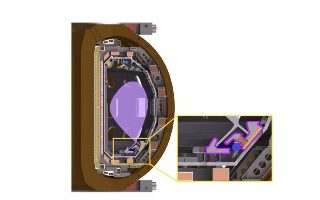
DIII-D National Fusion Facility and Kyoto Fusioneering will design and install a negative-triangularity divertor in the DIII-D tokamak, with the company supplying its armor tiles. The system will let researchers test heat and particle exhaust under conditions relevant to fusion power plants, building on DIII-D’s 2023 experiments that produced high-performance plasmas without edge-localized modes.
Sarah Gibboney, founder and CEO of Gibboney Nuclear, argues that advanced reactors’ main hurdle is institutional execution—not reactor physics. Her dataset tracks 125 developers and 178 designs, and she says projects succeed or fail based on regulatory credibility, financing and supply chains, organizational maturity, and operational planning.